The Ellington Effect Workshop #12: East St. Louis Toodle-oo
Join us for the live Zoom workshop on February 20 at 3:00 PM Eastern Standard Time.
Can't make the live call? Your ticket includes access to the video recording forever.
Each presentation will last around 90 minutes to 2 hours, followed by a Q & A.
Joining any workshop also gets you access to the private Ellington Effect Facebook group, where lively discussions continue after the workshops finish.
The Ellington Effect workshops take place once a month, and David picks a different Ellington composition to analyze for each one. In about two hours, he talks through the piece note by note, line by line, analyzing the piece at both macro and micro levels.
David Berger has studied the music of Duke Ellington for over 50 years, and has transcribed over 500 Ellington and Strayhorn arrangements and compositions. Because of this, he is able to make connections to Ellington's other pieces, talk about trends and eras in Ellington's writing, and discuss the influences of changing personnel on the music over time.
At the end of each workshop, David answers questions for a half hour or so. These are always lively and fascinating, as workshop attendees tend to include some highly knowledgable Ellingtonians as well as plenty of intelligent musicians who ask insightful questions.
About East St Louis Toodle-oo
Ellington’s First Masterpiece: East St. Louis Toodle-oo
Before we get started, it’s pronounced “East St. Louis Toad-low,” with the accent on “toad.” Most likely someone at the record company on the second recording of the piece for Vocalian mistook “todalo” (a broken walk, which became a 1920’s dance) for “toodle-oo” (slang for goodbye). The derivation of toodle-oo came from doughboys (American soldiers) coming back from France at the end of World War I in 1918 where they perverted the French phrase a tout a l’heure, meaning “see you soon.” All this is a roundabout way of saying that although it’s spelled East St. Louis Toodle-oo, it’s pronounced East St. Louis Todalo.
Ellington explained the title describing the broken walk of a man coming home from a hard day’s work at dusk on a hot summer’s day in East St. Louis, MO. His life is hard, but he has much hope in his heart and soul. This colorful story is a big improvement over the original title, Harlem Twist, which was used on the first recording for Vocalion November 29, 1926.
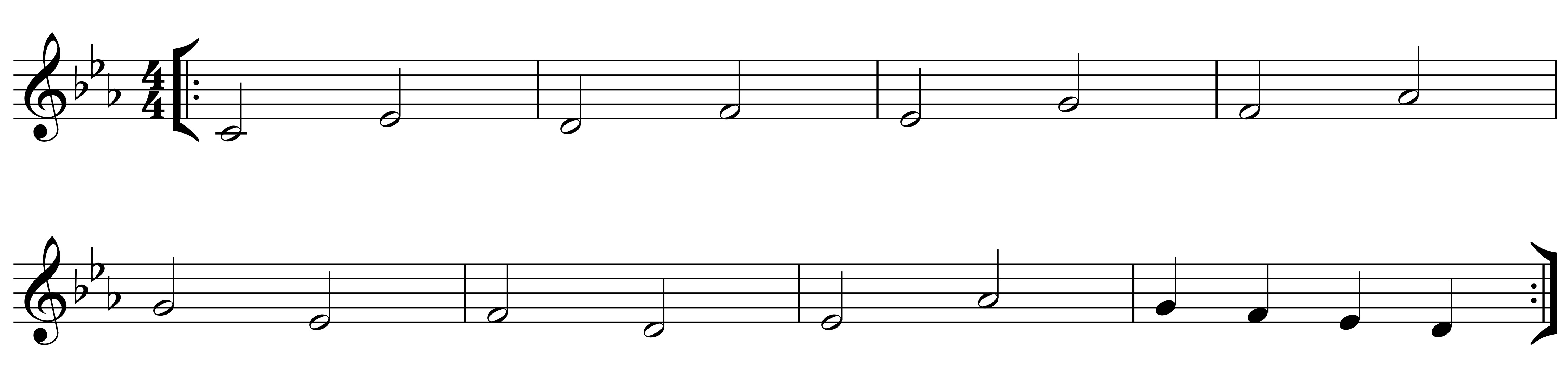
How this piece came about: The story goes that due to a suspicious fire that closed the Kentucky Club, Duke Ellington and his band, then known as The Washingtonians, spent the summer of 1926 playing dancehall dates all over New England for promoter Sy Shribman. The ten men and their instruments would pile into a huge touring car and drive from venue to venue often passing a billboard which advertised Oleawando Cleaners, a local dry cleaner. After a while, the fellows started clowning around singing “O-lea-wan-do, O-lea-wan-do, O-lea-wan-do, O-lea-wan-do” in the style of a funeral dirge or Russian work song.
Once this became a routine, Ellington orchestrated the line and expanded it into a full-scale piece that soon became the band’s signature theme and remained so until Take The “A” Train replaced it in 1941. In order to keep East St. Louis Toodle-oo fresh, Duke wrote new arrangements in 1936 and 1956.
In the tradition of the pre-Baroque quodlibet, Ellington combined elements from seemingly incompatible music from different genres, in this case a Russian work song, vocal blues, Vaudeville and Tin Pan Alley popular songs. The genius isn’t merely throwing these disparate ideas into one piece but seamlessly integrating them into a satisfying story.
Wynton Marsalis once told me about a woman he knew who was able to see the relationships between vastly different ideas that no one else could. He and I agreed that we need to include this ability in our definition of genius. East St. Louis Toodle-oo is an early example of Ellington’s genius in this regard. It’s present in all his music and is at the heart of some pieces like Harlem Airshaft, Echoes Of Harlem, and his longer works like Black, Brown And Beige, Tattooed Bride, and Harlem.
Instrumentation
The 1926 lineup is almost identical to that of Fletcher Henderson’s band, the leading Black big band of the day. Henderson had 3 Reeds (2 alto saxes and 1 tenor sax, all of which doubled on clarinet), 3 trumpets, a trombone, Banjo, Piano, Bass (doubling on tuba), and drums. Ellington had one fewer trumpet, but his reed players doubled on soprano, baritone and bass saxophones in addition to clarinet). This wider palette is evident starting on the first somber note of East St. Louis Toodle-oo with the two bari saxes voiced above and below the tenor sax. It is likely that the top part was originally written for Otto Hardwick to play on alto saxophone, and somewhere along the line, either he or Ellington decided on the darker baritone sax.
Personnel March 22, 1927 for Okeh Records
Otto Hardwick: baritone and soprano saxophone
Rudy Jackson: tenor saxophone and clarinet
Harry Carney: baritone saxophone and clarinet
Bubber Miley, Louis Metcalf, trumpets
Joe “Tricky Sam” Nanton, trombone
Fred Guy, banjo
Duke Ellington, piano
Bass Edwards, bass
Sonny Greer, drums
There is some debate concerning the tenor/clarinet player on the date. Prince Robinson is sometime credited, but Phil Schaap found evidence that Robinson was elsewhere on that day.
Form
East St. Louis Toodle-oo is constructed in rondo form: ABABA.
Intro 8 bars (C minor)
A aaba 32 bars (C minor—bridge in Eb major)
B cc’ 18 bars (trombone solo (Eb major)
A 16 bars clarinet solo (C minor)
B 18 bars shout chorus (Eb major)
B 18 bars soli/shout chorus (Eb major)
A 8 bars (C minor)
Contents
Join the Ellington Effect private facebook group
Listen to a recording.
Check out the score
Workshop recording
A few days after the live workshop, this section will contain the video recording of the workshop.